WTO PUBLIC FORUM 2012

SESSION 29: PLURILATERALISM AGAINST MULTILATERALISM?: A MULTI-STAKEHOLDER PERSPECTIVE*

Tuesday, 25 September 2012, 18:15 — 20:15, Room S3

This session aimed to discuss the concepts of multilateralism and plurilateralism and to assess the potential impact of plurilateral agreements within the WTO multilateral trading system. Plurilateral agreements can be concluded by three or more WTO members and cover trade issues labelled WTO plus, extra or minus. They can be adopted both within and outside the WTO framework. They can be “preferential” agreements or agreements based on the most-favoured-nation (MFN) principles. Future plurilateral trade agreements negotiated within the WTO could bring more transparency, and third parties’ rights would be better protected under the WTO dispute settlement procedure.

If a plurilateral agreement is adopted outside the WTO framework, other WTO members need not be included, and negotiations would not include other WTO members not party to the agreement. It would then lead to the creation of a “soft law”, since a plurilateral agreement outside the WTO would not have the same legal and political weight and could not aspire to an “international standard”. A plurilateral trade agreement within the WTO that extends MFN benefits to non-treaty WTO members would avoid trade distortions. Conversely, if a WTO-based plurilateral trade agreement is kept as a preferential agreement (non-MFN), it would avoid free-riding by non-members and provide an incentive for others to join.

Speakers and the audience were invited to ponder the following questions:

· To what extent is it possible to “multilateralize” plurilateralism?
· What are the different “options” to negotiate plurilateral agreements?
· What are the implications of plurilateral agreements for the multilateral trading system?
· Besides services, could other trade areas be negotiated through plurilateral approaches? If so, which areas?
· What are the strategies and tactics available to developing and least-developed countries in the negotiation of plurilateral agreements?

1-Summary
2-Professor Raymond Saner
3-H.E. Mr Yonov Frederick Agah
4-Mr Lu Xiankun, Counsellor
5-Mr Nicholas Niggli
6-Professor Robert Wolfe
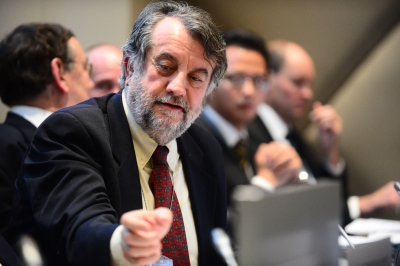
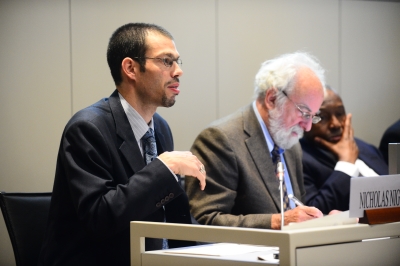
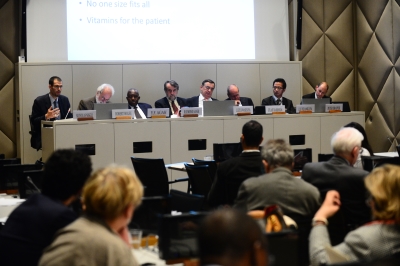
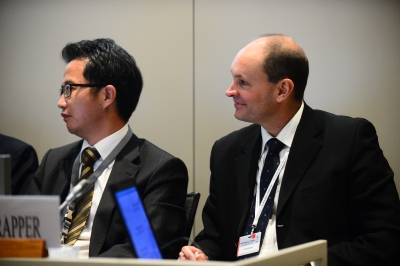
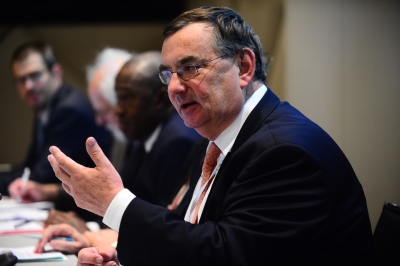
7-Photos of the event
IMF Conditionalities for the Least Developed Countries

Raymond Saner & Ricardo Guilherme, G-24 Policy Brief Nr. 19; 1st March 2014 IMF Conditionalities for the Least Developed Countries.

This policy brief argues that, all too often, the Fund’s use of “conditionalities” for lending has stepped beyond its core legal mandate, particularly causing harm to the least developed countries’ economic development, for example by dictating their trade policies.

Article

The WTO, Climate Change and Sustainable Development

Raymond Saner (2024) “The WTO, Climate Change and Sustainable Development” (accepted for publication to be published as IJSD 2024 V27 N3)

The author contributes to the trade & environment debate that so far excluded theoretical concepts such as the principle of mutual supportiveness of international agreements, the insights of public goods theory, and a positive trade & environment agenda.

Based on the inclusion of these new concepts, an enlarged frame of trade, environment, and development is proposed which forms the basis for a reinterpretation of standard WTO articles making a more inclusive approach possible to stop climate change. For instance, the Local Content Requirement is discussed as a means to support citizens of developing countries to generate their renewable energy sources combined with a reinterpretation of Intellectual Property Rights to make the transfer of technology possible of renewable energy in the less developed parts of the world.

The suggested solution is a cross-régime/forum agreement to reduce climate risks by integrating trade into the 2030 Agenda and its 17 SDGs resulting in a reduction of climate warming which is much less costly than the looming future costs and liabilities caused by climate change.

Article

(Strategies and Importance of International Organisations) in the context of the teaching programme on “Globalisation Talks

Raymond Saner, Titular Professor, University of Basel, WWZ, presentation on 5th November 2021 on “Strategien und Bedeutung Internationaler Organisationen” (Strategies and Importance of International Organisations) in the context of the teaching programme on “Globalisation Talks” of Professor Rold Weder, Dean, Economic Sciences Center (WWZ), Basel

Presentation

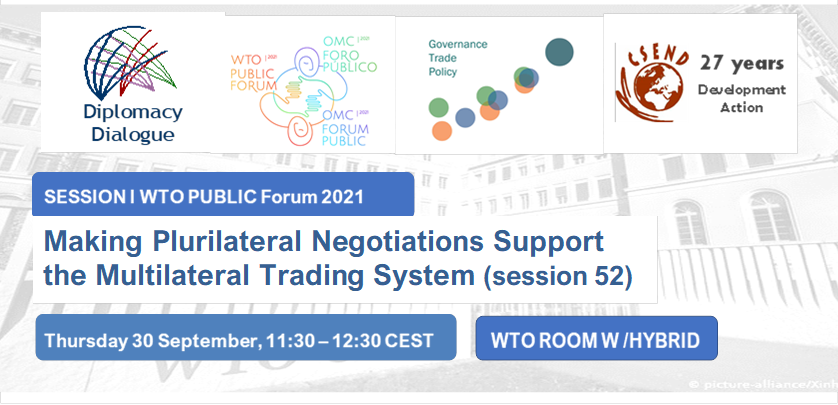
Making plurilateral negotiations support the multilateral trading system

WTO Public Forum 2021, Organizer Raymond Saner, CSEND-DD, Geneva

20210925 image018


BACKGROUND

This session focuses on the sub-theme of PF21, “Strengthening the Multilateral Trading System”. The panelists will assess how plurilateral
agreements and plurilateral initiatives could be fully mulilateralized or conclude that plurilaterals will remain outside the WTO context.

Speakers and the audience will be invited to ponder the following questions:

1.      To what extent is it possible to “multilateralize” plurilateralism today (20 years into the Doha  Round Negotiations with no agreement in sight
and increasing numbers of FTAs/RTAs)?

2.      What are the different “options” to negotiate plurilateral agreements   (with or without MFN)?

3.      What are the implications of plurilateral agreements for the multilateral trading system    (Leading to more integration or fragmentation of the trading system)?

4.      Besides Services, Environmental Goods, Investment, could other trade areas be negotiated  through plurilateral approaches? If so, which areas?

5.      What are the strategies and tactics available to developing and least developed countries in the negotiation of plurilateral agreements?


SPEAKERS:

Hamid Mamdou, ret. Former Head of the Services and Investment Division at WTO, now with King & Spalding, Geneva

Stuart Harbinson, former Trade Representative of Hong Kong to WTPO, then became a senior WTO official, being Chief of Staff to DG Supachai and later Special Adviser to Pascal Lamy

Professor Peter Draper, Interim Head: School of Economics and Public Policy, Executive Director: Institute for International Trade, University of Adelaide, previously with SAIIA, South Africa

Mr. Pradeep S Mehta, Secretary General, CUTS, Jaipur, India

CHAIR

Prof. Raymond Saner, Titular, Basel University and co-founder of CSEND, Geneva

MODERATOR

Lichia Yiu, E.D., president, CSEND, Geneva

BACKGROUND MATERIAL

“Plurilateral Agreements: Key to solving impasse of WTO/Doha Round and basis for future trade agreements within the WTO context”, CSEND Policy Brief, 2012  http://www.csend.org/images/articles/files/CSEND_Policy_Brief_Nr_7_Plurilaterals_April_2012_1.pdf

REGISTRATION:

All sessions at the WTO Public Forum 2021 can be joined virtually. The full Public Forum calendar can be accessed here.


We kindly request you to register for them below.

Register Now!

ORGANISED BY

Centre for Socio-Eco-Nomic Development (CSEND)
www.csend.orgwww.diplomacy.org

logo csend 27years

Labour Rights as Human Rights: Evaluating the policy coherence of USA, EU and Australia through trade agreements and their participation in the Universal Periodic Review

The purpose of this study is to find policy coherence, or lack thereof, in the labour provisions contained in the Free Trade Agreements (FTAs) of the United States of America, the European Union and Australia when compared to their interactions in the Universal Periodic Review (UPR) Sessions with their trade partners and to the official trio of UPR documents made available during these sessions. Over the past decade these countries have entered into various free trade agreements with developing and developed countries alike. However, it is their trade agreements with developing countries that are of particular interest.

Article

Could plurilateral agreements provide a way forward out of the current impasse of the WTO/Doha Round?

This Diplomacy Dialogue Debate addresses the following question:
Could plurilateral agreements provide a way forward out of the current impasse of the WTO/Doha Round?

The inputs for this Policy Debate are based on exchanges amongst trade experts namely: Mr. Grant Aldonas, Senior Advisor (Non-resident), Centre for Strategic and International Studies; Mrs. Jane Drake-Brockman, Global Services Network; Mr. Guy de Jonquières, Senior Fellow at ECIPE and Ambassador B. K. Zutshi, Ambassador of India to the General Agreement on Tariffs and Trade (1989 to 1994)

For an in-depth analysis of the plurilateral options for WTO see:
Raymond Saner; (2012), Plurilateral Agreements: Key to solving impasse of WTO/Doha Round and basis for future trade agreements within the WTO context, CSEND Policy Brief Nr 7; ISSN 2235-8048, at: http://www.csend.org/csend-policy-briefs/item/310-csend-policy-briefs

Aricle

Doha stalemate: Implications and ways forward”, CSEND Policy Brief, Geneva, August 2011

The Doha Development Agenda (DDA) launched in 2001was supposed to achieve further trade liberalisation while at the same time taking into account the needs of developing countries. Ten years have passed since its inception. No end of the Round is in sight and the possibility of a full failure looms in the background. This policy note addresses the following questions: Why does the DDA seem to evolve towards failure? What could be done to rescue the Doha Round?

Article

The 2010 World Investment Report

The 2010 World Investment Report ” focuses focuses on trends in foreign direct investment (FDI) worldwide, at the regional and country levels and emerging measures to improve its contribution to development. The year’s report, titled “Investing in a Low-Carbon Economy”, discusses the opportunities and threats for developing countries in the transition to a low-carbon economy, and considers how foreign investment and transnational corporations can be leveraged in supporting this process.

Professor Saner was member of the think tank which helped draft Chapter IV (Low Carbon FDI).

Link