Applied Psychology Around the World, APAW, Vol. 6, Issue 2. (ISSN: 2639-6521). pp 200-212.
A humanitarian delegate works for humanitarian organizations, such as the International Committee of the Red Cross (ICRC), Médecins Sans Frontières (Doctors without Borders), the International Federation of Red Cross and Red Crescent Societies, Médecins du Monde (Doctors of the World) or the United Nations Office for the Coordination of Humanitarian Affairs (OCHA). Their humanitarian delegates are deployed to conflict zones, disaster areas, or regions facing severe humanitarian crises. Their roles involve a wide range of activities aimed at alleviating human suffering and protecting the rights and dignity of affected populations. As the demand for humanitarian aid workers continues to increase, the international community must understand the effects that the increasing complexity of their job has on the humanitarian delegate’s performance and state of mind. This article describes the many factors that can contribute to the work stress of the humanitarian delegate and how humanitarian organizations can mitigate the work stress of their delegates.
The five legacy papers, Stakeholder Forum for a Sustainable Future (2022), The People’s Environ-ment Narrative. pp 647-685, Utrecht, the Netherlands
This chapter provides an assessment of the current relation, interaction and importance of Science for the UN Environment Programme, UNEP, as a key enabler of its mandate to catalyze environmental policies, strategies and actions for the benefit of world citizens and the planet.
This review is based on semi-structured qualitative interviews with renowned international experts about their views on UNEP’s role and contributions to the international multilateral environmental system and on the emerging challenges and needs of knowledge production through science. Highlights will be given to exemplify the impact of proposed policy choices, the monitoring mechanisms created to track scientific knowledge – how it got translated and popularized – since UNEP’s inception in 1972. Observations made by these experts on UNEP’s challenges and shortfalls will also be reported. The authors conclude with recommendations on how UNEP could strengthen its science-policy-society interface and strengthen its role as key international advocate and custodian of sustained environmental development through effective science-policy-society dialogue and mutual learning.
“Private Financing in Global Health Partnerships: Influences and Choices”; (CSEND Working Paper); CSEND Policy Brief No. 11, ISSN 2235-8048,
The objective of this study and its consequent report was to trace the influence of the inclusion of private finance in the global health development context through its involvement in current public private partnerships throughout the 21st century. It highlights the impact of private financing, mainly through the Bill and Melinda Gates Foundation, on the subsequent goals and indicators of the partnerships it funds, as well as the ability of those goals to address global health goals set by the MDGs and monitored by the WHO.
“Leveraging Business Diplomacy”, in The Role of Multinational Enterprises Supporting the United Nations’ SDGs, edited by John McIntyre, Silvester Ivanaj and Vera Ivanaj, Edward Elgard,pp 190-215)
This book chapter suggests that MNEs should take into consideration the use of business diplomacy in order to successfully manage the growing number of standards of required good business practice as well as to identify opportunities for business investment and participation in the SDGs. MNEs need the knowledge and competence of business diplomats to avoid failures and loss of reputational capital, such as Nestlé and its baby milk formula or Shell Company’s misguided oil and gas exploration in Nigeria (Saner and Yiu, 2000).
Stuart Carr et al, Sustainability, 9 July 2025, Vol. 17
The concept of a sustainable livelihood affords protection from crises and protects people, including future generations. Conceptually, this paper serves as a study protocol that extends the premises of decent work to include and integrate criteria that benefit people, planet, and prosperity.
This paper explores the potential for greater policy and implementation synergy between the 2030 Agenda for Sustainable Development and the Paris Agreement on Climate Change. While both frameworks share common objectives related to sustainability, equity, and transformation, they have largely evolved on separate parallel tracks. The paper argues that a more integrated approach—linking Sustainable Development Goals (SDGs) and Nationally Determined Contributions (NDCs)—is essential for achieving transformative outcomes that are both equitable and environmentally resilient.
Applied Psychology Around the World, Vol. 7, Issue 3, December 2025
Philanthropic foundations have emerged as significant non-state actors in global governance. Their financial strength, intellectual resources, and convening capacity grant them a unique influence over international policy agendas. Large foundations such as the Bill & Melinda Gates Foundation, the Welcome Trust, and the Rockefeller Foundation have gone beyond traditional charitable giving; they now shape priorities in health, education, and climate change at both national and global levels (McGoey, 2015). Unlike corporations, foundations are not primarily motivated by profit, and unlike governments, they are not bound by electoral cycles. This positioning enables them to act with agility, direct resources toward high-risk innovations, and sustain long-term initiatives. Yet, the very features that empower foundations also present dilemmas. Their influence is often asymmetrical compared with state actors, especially in low- and middle-income countries. The objective of this study and its consequent report was to trace the influence of the inclusion of private finance in the global health development context through its involvement in current public private partnerships throughout the 21st century. It highlights the impact of private financing, mainly through the Bill and Melinda Gates Foundation, on the subsequent goals and indicators of the partnerships it funds, as well as the ability of those goals to address global health goals set by the MDGs and monitored by the WHO.
The panel tackled the issue of the Digital Black Box and offered preliminary ideas on enhancing CSO participation in the UN and IOs. The goal was to pave the way for a more transparent, inclusive, and effective engagement in the digital age. The session focused on the challenges posed by the ‘Black Box’ trap of digital platforms of UN and International Organisations, which instead of fostering engagement, are currently hindering the involvement of Civil Society Organizations (CSOs). Is it a technological challenge due to insufficient financial and technical resources necessary for enhancing UN transparency and openness? Or is it the lack of a clear policy mandate and a clear code of conduct on what constitutes CSO engagement and participation?
The objective of this paper is to understand the poverty of Single-Mother households around the world and the factors contributing to their existence and struggles.
Using the sustainable livelihood framework, the paper analyzes the benefits cooperatives can bring to Single Mothers in addressing their poverty in developing countries in general and in Ethiopia in particular.
In Conclusion, the paper proposes additional data collection and studies to determine the impact that cooperatives can have on poverty alleviation for women and Single Mothers in Ethiopia.
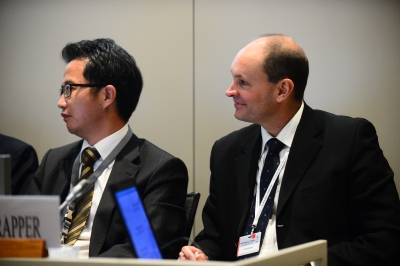
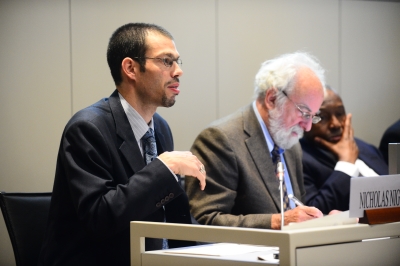
SESSION 29: PLURILATERALISM AGAINST MULTILATERALISM?: A MULTI-STAKEHOLDER PERSPECTIVE*
Tuesday, 25 September 2012, 18:15 — 20:15, Room S3
This session aimed to discuss the concepts of multilateralism and plurilateralism and to assess the potential impact of plurilateral agreements within the WTO multilateral trading system. Plurilateral agreements can be concluded by three or more WTO members and cover trade issues labelled WTO plus, extra or minus. They can be adopted both within and outside the WTO framework. They can be “preferential” agreements or agreements based on the most-favoured-nation (MFN) principles. Future plurilateral trade agreements negotiated within the WTO could bring more transparency, and third parties’ rights would be better protected under the WTO dispute settlement procedure.
If a plurilateral agreement is adopted outside the WTO framework, other WTO members need not be included, and negotiations would not include other WTO members not party to the agreement. It would then lead to the creation of a “soft law”, since a plurilateral agreement outside the WTO would not have the same legal and political weight and could not aspire to an “international standard”. A plurilateral trade agreement within the WTO that extends MFN benefits to non-treaty WTO members would avoid trade distortions. Conversely, if a WTO-based plurilateral trade agreement is kept as a preferential agreement (non-MFN), it would avoid free-riding by non-members and provide an incentive for others to join.
Speakers and the audience were invited to ponder the following questions:
· To what extent is it possible to “multilateralize” plurilateralism? · What are the different “options” to negotiate plurilateral agreements? · What are the implications of plurilateral agreements for the multilateral trading system? · Besides services, could other trade areas be negotiated through plurilateral approaches? If so, which areas? · What are the strategies and tactics available to developing and least-developed countries in the negotiation of plurilateral agreements?